
Festive Drinking in Bangalore: When Does Celebration Become a Drinking Problem?
Festivals are a time for happiness, family gatherings, parties and celebrations. For many people, alcohol can also become part of these occasions. Having a drink during a celebration does not automatically mean someone has an alcohol problem.
However, sometimes “just drinking during celebrations” can slowly turn into a pattern that becomes difficult to control.
The important question is not only how often you drink, but how alcohol affects your life. Alcohol can cause dependence, and many alcohol-related harms are associated with heavy or repeated drinking.
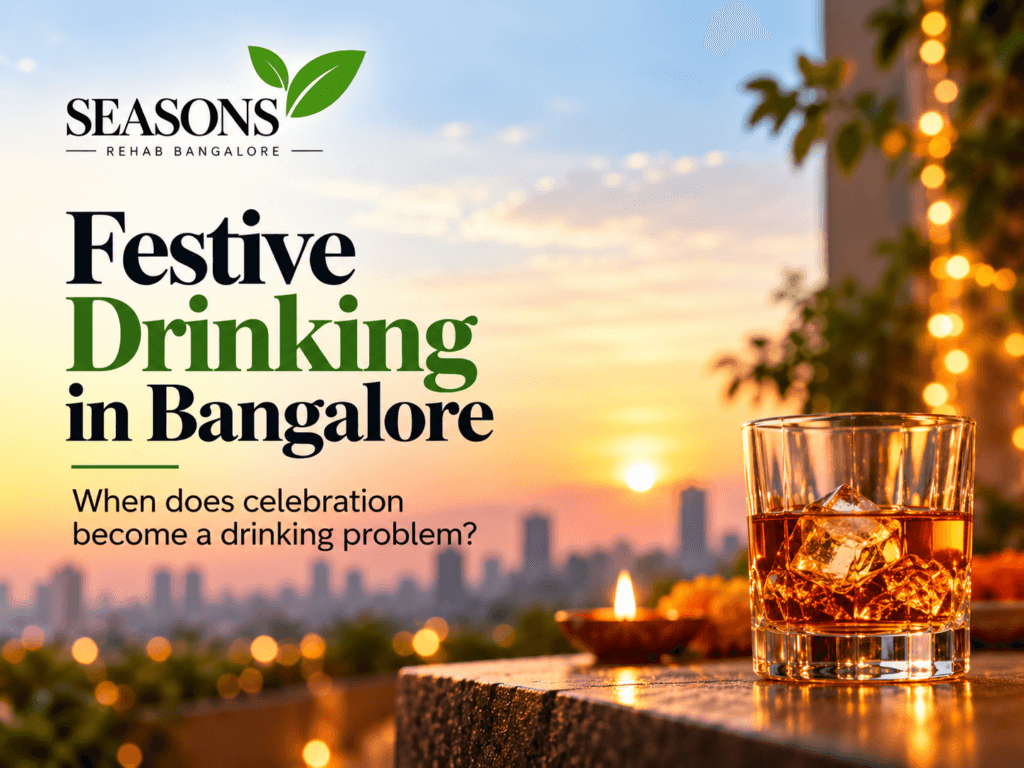
When Does Festive Drinking Become a Problem?
During festivals and social gatherings, it can be easy to drink more than usual. Friends may encourage another drink, parties may continue late into the night, and alcohol may become associated with having fun or relaxing.
You may want to ask yourself:
- Do I regularly drink more than I planned?
- Is it becoming difficult to stop after one or two drinks?
- Do I look forward to drinking at every celebration?
- Do I use alcohol to deal with stress, loneliness or difficult emotions?
- Have family members or friends expressed concern about my drinking?
- Has drinking affected my work, relationships or responsibilities?
- Have I tried to reduce my drinking but struggled to do so?
These can be warning signs of problematic alcohol use
“I Only Drink During Festivals”
This is something many people say when discussing their drinking.
Occasional drinking does not automatically mean addiction. However, the amount consumed and what happens when you drink also matter.
Heavy drinking during parties can lead to accidents, injuries, poor decisions and other health and social problems. Over time, repeated harmful drinking can also contribute to alcohol dependence. World Health Organization
If every festival, weekend or social event becomes an excuse to drink heavily, it may be worth taking a closer look at your relationship with alcohol.



How Can Families Recognise the Warning Signs?
Family members may notice changes before the person drinking recognises them.
Some signs include:
- Increased frequency or quantity of drinking
- Drinking secretly or alone
- Mood changes and irritability
- Frequent arguments at home
- Problems at work
- Financial difficulties
- Neglecting family responsibilities
- Strong cravings for alcohol
- Needing increasing amounts of alcohol to feel the same effects
Continuing to drink despite problems with health, work or relationships is an important warning sign.
What If Someone Wants to Stop Drinking?
Seeking professional help does not mean someone has failed. Alcohol-use problems are treatable, and support can include counselling, medical care, relapse-prevention strategies and ongoing recovery support.
If someone has been drinking heavily for a long time and experiences shaking, sweating, anxiety, nausea, confusion or other withdrawal symptoms when they stop, they should seek medical advice rather than attempting to stop suddenly without supervision. Severe alcohol withdrawal can be dangerous. nhs.uk
Celebrate Without Losing Control
Festivals should be about creating memories with family and friends—not dealing with the consequences of excessive drinking.
If alcohol is becoming difficult to control, affecting relationships or interfering with everyday life, asking for help early can make a difference.
Recovery is possible. The first step is recognising that help may be needed.
If you or someone you care about is struggling with alcohol dependence, professional support is available.