
Early Signs of Drug Addiction in Young Adults
Early Signs of Drug Addiction in Young Adults
Recognising the Warning Signs Before the Problem Becomes Severe
Young adulthood is a period of significant change. College, employment, relationships, financial pressure and the desire for independence can create excitement, but they can also lead to stress, loneliness and emotional uncertainty.
During this stage of life, some young adults may experiment with cannabis, prescription medicines or other substances because of curiosity, peer pressure, academic stress or the desire to escape difficult emotions. Experimentation does not always lead to addiction, but repeated substance use can gradually become harmful.
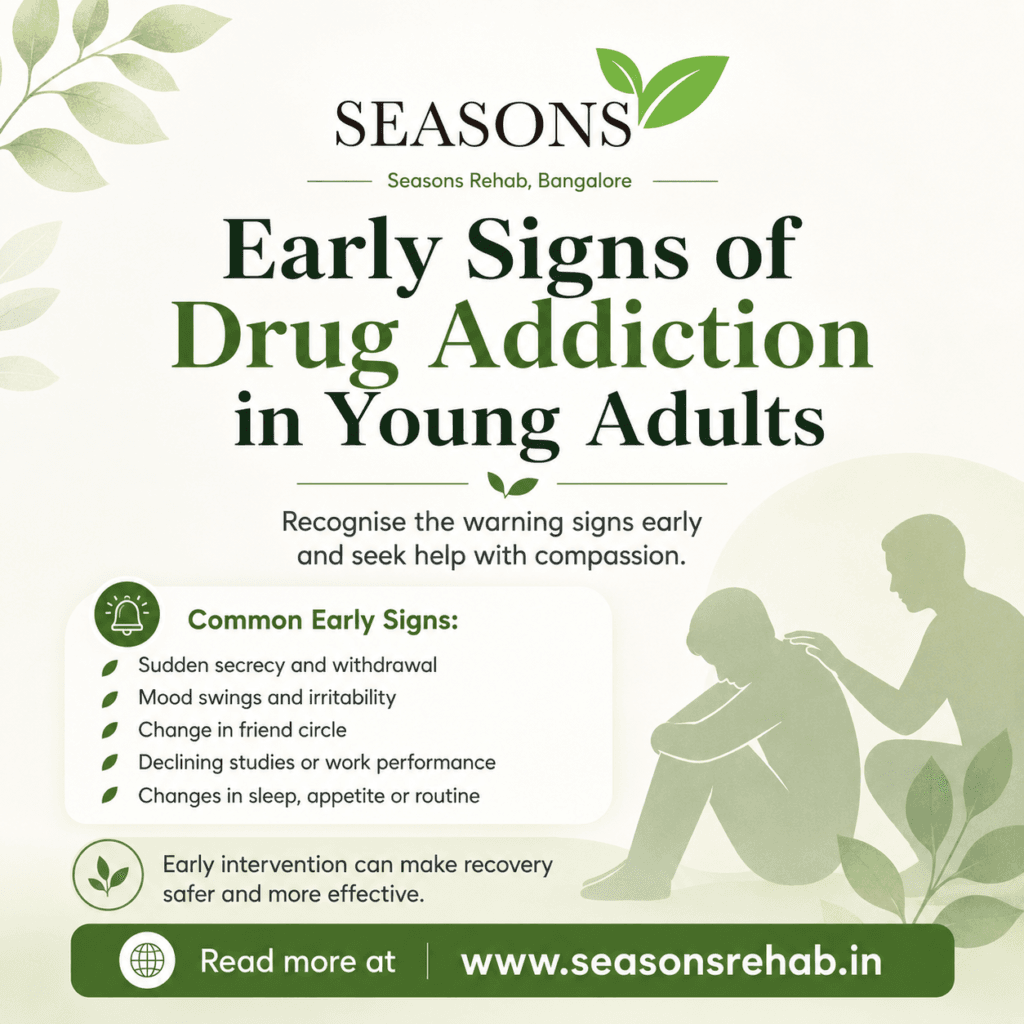
Drug addiction often develops quietly. Families may initially interpret changes in behaviour as ordinary teenage rebellion, academic pressure or moodiness. Recognising the early signs of drug addiction can help families seek professional guidance before the situation causes serious damage.
At Seasons Rehabilitation Centre in Bangalore, we believe that early intervention can make the path to recovery safer and more manageable.
Why Young Adults May Be Vulnerable to Drug Use
There is rarely one single reason why a young person begins using drugs. Substance use may be influenced by a combination of emotional, social and environmental factors.
Common contributing factors can include:
Peer pressure and the desire to fit in
Curiosity or experimentation
Academic or workplace stress
Relationship difficulties
Family conflict
Low self-esteem
Loneliness or social isolation
Anxiety, depression or unresolved trauma
Easy access to drugs or prescription medicines
A belief that occasional use is harmless
Understanding these factors does not excuse harmful behaviour. However, it can help families respond with compassion rather than anger, blame or shame.
Early Behavioural Signs of Drug Addiction
Behavioural changes are often among the first warning signs noticed by parents, partners or friends.
1. Sudden Secrecy
A young adult may become unusually private about where they are going, whom they are meeting or how they are spending their money. They may hide their phone, avoid answering simple questions or provide inconsistent explanations.
Privacy is normal for young adults, but persistent secrecy combined with other concerning changes may require attention.
2. A New Social Circle
A sudden change in friends is not automatically a sign of drug use. However, concern may be justified when the person abandons long-term friendships, refuses to introduce new friends or repeatedly spends time in unfamiliar places without explanation.
3. Loss of Interest in Previous Activities
Young adults struggling with substance use may stop participating in sports, hobbies, family gatherings or activities they previously enjoyed. Their attention may gradually become centred on obtaining, using or recovering from drugs.
4. Declining Academic or Work Performance
Missed classes, falling grades, frequent absences, incomplete assignments or poor workplace performance can be early warning signs. The person may also lose motivation, arrive late or struggle to concentrate.
5. Unexplained Financial Problems
A young adult may frequently ask for money, sell personal belongings, borrow from friends or provide unclear explanations about their spending. Money or valuable items may also begin disappearing from the home.
6. Breaking Rules or Taking Unusual Risks
Substance use can lead to impulsive decisions. These may include driving under the influence, staying away from home overnight, getting into fights, stealing or engaging in unsafe situations.
Emotional and Psychological Warning Signs
Drug use can affect mood, thinking and emotional regulation. Families may notice:
Sudden mood swings
Irritability or aggression
Anxiety or restlessness
Unusual excitement or excessive confidence
Periods of sadness or emotional withdrawal
Lack of motivation
Confusion or difficulty concentrating
Suspiciousness or paranoia
Unexplained fear or panic
Defensiveness when substance use is discussed
One symptom alone does not prove addiction. Mental health conditions, stress and other personal difficulties can cause similar changes. A professional assessment is the safest way to understand what may be happening.
Physical Signs That Should Not Be Ignored
The physical effects of drug use vary according to the substance, frequency of use and the person’s overall health.
Possible warning signs include:
Red or bloodshot eyes
Unusually large or small pupils
Sudden weight loss or weight gain
Changes in appetite
Poor personal hygiene
Trembling or excessive sweating
Slurred or unusually rapid speech
Frequent nosebleeds
Unexplained marks, bruises or injuries
Lack of coordination
Sleeping too much or very little
Repeated headaches, nausea or fatigue
Unusual smells on clothing or breath
Families may also discover tablets without prescriptions, burnt foil, rolling papers, small plastic packets, syringes or other unfamiliar objects. These discoveries should be approached carefully and without immediate accusations.
Changes in Sleep and Daily Routine
Substance use often disrupts a person’s normal schedule. A young adult may stay awake throughout the night, sleep during the day, disappear for extended periods or struggle to wake up for college or work.
They may also begin skipping meals, neglecting responsibilities or spending long periods alone in their room.
A consistently disrupted routine, particularly when combined with behavioural and physical changes, may indicate that professional support is needed.
Denial and Defensive Behaviour
A young person may strongly deny drug use even when the signs appear obvious. They may say:
“I can stop whenever I want.”
“Everyone does it.”
“It is only occasional.”
“You are overreacting.”
“It helps me manage stress.”
“It is not affecting my life.”
Denial is common because the person may fear punishment, judgment, withdrawal symptoms or being forced into treatment. Arguments and threats can sometimes make them more secretive.
A calm, respectful conversation is usually more productive than confrontation.
Experimentation or Addiction: What Is the Difference?
Not every instance of substance use means that a person is addicted. However, the risk becomes more serious when the person:
Uses drugs more frequently or in larger amounts
Needs more of the substance to experience the same effect
Has tried to stop but cannot
Experiences cravings
Becomes unwell when the drug is unavailable
Neglects education, work or relationships
Continues using despite harmful consequences
Spends increasing amounts of time obtaining or using drugs
Uses substances to cope with everyday emotions or responsibilities
These patterns may suggest that substance use is progressing towards dependence or addiction.
How Families Should Respond
Discovering possible drug use can be frightening. Parents and family members may feel angry, guilty, confused or helpless. However, the way the first conversation is handled can influence whether the young adult becomes open to receiving help.
Choose an Appropriate Time
Speak when the person appears sober and the environment is calm. Avoid beginning the conversation during an argument or while the person is under the influence.
Focus on Specific Changes
Rather than saying, “You are ruining your life,” explain what you have observed:
“I have noticed that you have missed college several times, you are not sleeping properly, and you often ask for money. I am worried about you.”
Listen Without Immediately Judging
Allow the young person to speak. They may be dealing with anxiety, trauma, bullying, relationship problems or other difficulties that have contributed to their substance use.
Set Healthy Boundaries
Compassion does not mean ignoring harmful behaviour. Families may need to set clear limits regarding money, violence, driving, drug use inside the home and other unsafe behaviour.
Seek Professional Guidance
Families do not have to manage addiction alone. A qualified addiction professional can assess the situation, explain available treatment options and help the family decide what steps to take.
Why Early Intervention Matters
Waiting for a major crisis is not necessary. A person does not need to lose their education, employment, relationships or health before seeking treatment.
Early intervention may help:
Prevent substance use from becoming more severe
Reduce physical and psychological harm
Protect education and employment
Improve family communication
Address underlying mental health concerns
Lower exposure to dangerous situations
Begin recovery before consequences become more serious
Seeking help is not a punishment. It is an opportunity to understand the problem and begin rebuilding a healthier life.
How Seasons Rehabilitation Centre Bangalore Can Help
At Seasons Rehabilitation Centre in Bangalore, treatment is approached with dignity, confidentiality and compassion. Every person’s experience of addiction is different, which is why recovery support should reflect individual needs rather than follow a single approach for everyone.
Depending on the person’s condition and professional assessment, support may include:
Initial assessment and personalised recovery planning
Medically supported detoxification where appropriate
Residential addiction treatment
Individual counselling
Group therapy
Cognitive behavioural approaches
Psychotherapy
Addiction education and workshops
Twelve-Step-based recovery support
Yoga and structured wellness activities
Relapse-prevention planning
Family sessions and mediation
Aftercare and reintegration support
Our team works to help residents understand the underlying causes of substance use, develop healthier coping skills, rebuild confidence and prepare for life after rehabilitation.



Recovery Is Possible
Drug addiction does not mean that a young person’s future is lost. With timely professional treatment, family support and a willingness to change, recovery is possible.
The earlier the warning signs are recognised, the earlier meaningful support can begin. Families should not wait for the situation to become an emergency before asking for guidance.
If a young adult in your family is displaying several warning signs of drug addiction, consider speaking with an addiction professional.
Contact Seasons Rehabilitation Centre Bangalore
For confidential guidance and information about addiction treatment, contact:
Seasons Rehabilitation Centre
35/1 B, Sathnur Road
Next to Country Club
Yelahanka, Bangalore – 560063
Phone: +91 78991 49174
Email: info@seasonsrehab.in
Website: seasonsrehab.in
Recovery can begin with one honest conversation. Reach out to Seasons Rehabilitation Centre Bangalore and take the first step towards a safer, healthier future.
What Happens After Early Intervention?
Professional rehabilitation centres typically begin with a comprehensive assessment to understand the individual’s physical health, mental health, and substance use history.
Treatment may include:
- Medically supervised detoxification
- Individual counseling
- Group therapy
- Family therapy
- Cognitive Behavioral Therapy (CBT)
- Relapse prevention planning
- Holistic therapies such as yoga, meditation, and fitness
- Aftercare and ongoing support
Each treatment plan is personalized to meet the individual’s unique recovery needs.
Why Choose Professional Addiction Treatment?
Attempting to overcome addiction alone can be difficult and, in some cases, dangerous. Professional rehabilitation provides:
- Safe medical supervision
- Evidence-based therapies
- Emotional and psychological support
- Structured daily routines
- Peer support from others in recovery
- Long-term relapse prevention strategies
Receiving expert care early gives individuals the best opportunity to achieve lasting sobriety.
Recovery Begins with One Decision
Every day that addiction continues increases the risk of health complications, damaged relationships, financial loss, and emotional distress. The good news is that recovery is possible, especially when treatment begins early.
Seeking help is not a sign of weakness—it is a courageous decision that can transform lives. Early intervention offers hope, healing, and the opportunity to build a healthier future.
Seasons Rehab believes that Early intervention can truly save lives by preventing addiction from progressing, reducing the risk of overdose, protecting mental health, and strengthening recovery outcomes. Whether you are concerned about yourself or someone you care about, acting sooner rather than later can make recovery easier and more successful.
Safe, Compassionate, and professional environment.
Rise and Shine – Seasons Rehab – India, Bangalore