
Weekend Drinking to Alcohol Dependence: When Does It Become an Addiction ?
A Guide to Recognising the Warning Signs and Finding Help at Seasons Rehab Bangalore
For many people, drinking alcohol is associated with weekends, social gatherings, celebrations or unwinding after a stressful week. A few drinks on a Friday or Saturday may seem harmless. But when weekend drinking gradually becomes heavier, more frequent or increasingly difficult to control, it may be a sign that alcohol is becoming a problem.
The important question is not simply “How many days a week do you drink?” The more important question is: “Are you still in control of your drinking?”
Alcohol Use Disorder (AUD) is a medical condition involving difficulty controlling alcohol use despite negative consequences. It can range from mild to severe, and problematic drinking can develop even when someone does not drink every day.
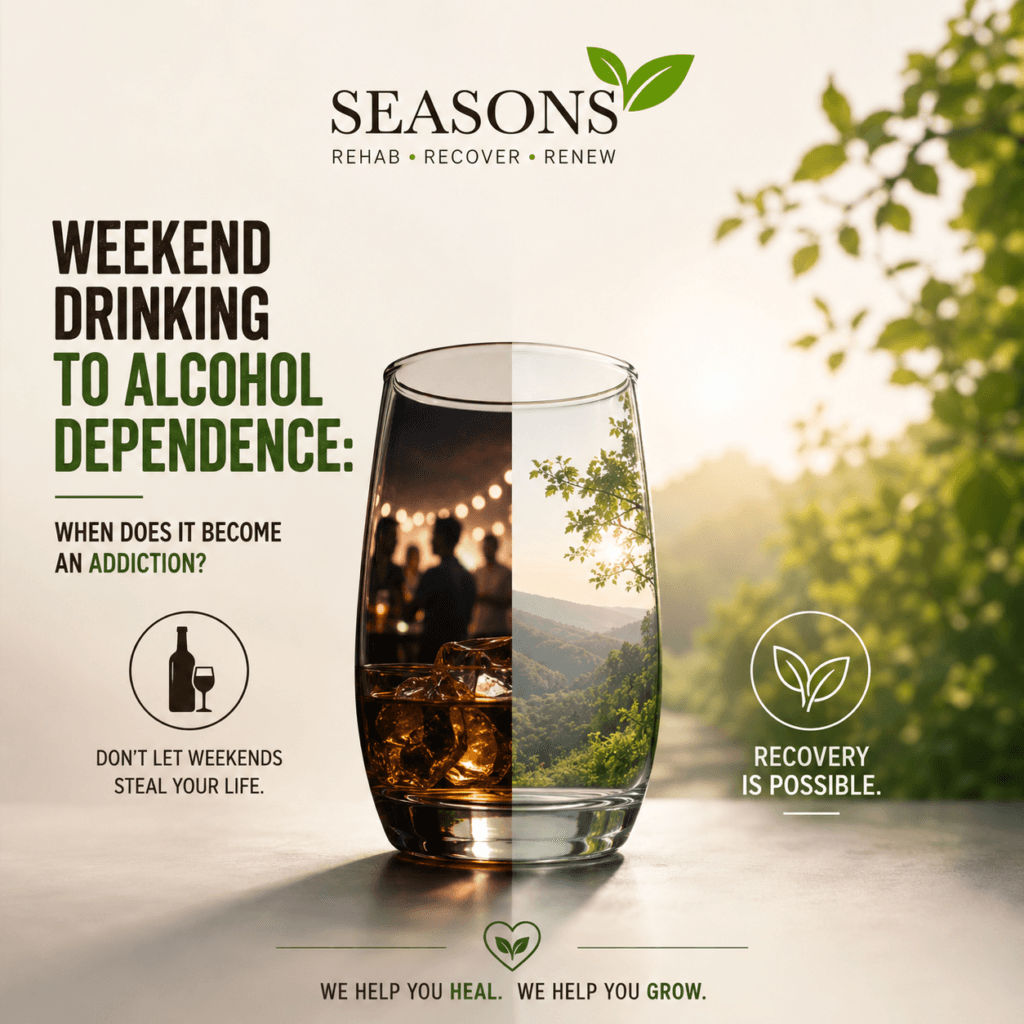
When Does Weekend Drinking Become a Concern?
Weekend drinking does not automatically mean someone is addicted to alcohol. However, certain patterns should not be ignored.
You may want to take a closer look at your drinking if:
- You look forward to the weekend mainly because you can drink.
- One or two drinks regularly turn into much more than planned.
- You repeatedly drink more or for longer than you intended.
- You have tried to reduce your drinking but struggled to do so.
- You experience strong cravings for alcohol.
- You need increasing amounts of alcohol to experience the same effects.
- You continue drinking despite arguments, relationship problems or difficulties at work.
- You use alcohol to cope with stress, anxiety, loneliness, anger or emotional pain.
- You spend significant time recovering from drinking or planning your next drinking session.
- Your weekends increasingly revolve around alcohol.
- You experience symptoms such as shakiness, sweating, anxiety, nausea or sleep problems when alcohol wears off.
These are among the symptoms clinicians consider when assessing Alcohol Use Disorder. A diagnosis is based on a pattern of symptoms over the previous 12 months, rather than simply the number of days a person drinks
The “I Only Drink on Weekends” Trap
One of the most common reasons people delay seeking help is:
“I don’t drink every day, so I can’t be addicted.”
This is a misconception.
Alcohol-related problems can occur in people who primarily drink on weekends. Binge drinking and heavy drinking patterns can increase the risk of developing Alcohol Use Disorder, and the amount consumed, speed of drinking and consequences of drinking all matter.
For example, someone may spend Monday through Thursday without alcohol but repeatedly consume large amounts every Friday and Saturday. Over time, drinking may become associated with relaxation, socialising or escaping stress. The brain can begin learning these associations, making cravings and habitual drinking stronger.
From Social Drinking to Dependence
Alcohol dependence usually does not appear overnight. For some people, the progression can look like this:
Social Drinking → Weekend Drinking → Heavy/Binge Drinking → Loss of Control → Cravings → Continued Drinking Despite Consequences → Dependence/Addiction
The progression is different for everyone. Some people remain at a problematic level for years, while others experience rapid escalation.
The warning sign is not necessarily the day alcohol is consumed. It is the growing loss of control and increasing impact on life.



7 Questions to Ask Yourself
If you’re unsure whether your weekend drinking has become a problem, ask yourself:
- Can I comfortably spend several weekends without alcohol?
- Do I regularly drink more than I originally planned?
- Have I tried to cut down and failed?
- Do I experience strong cravings for alcohol?
- Has drinking affected my relationships, work, finances or health?
- Do I need alcohol to relax, sleep, socialise or deal with stress?
- Have family members or friends expressed concern about my drinking?
If several of these questions raise concerns, it may be time to speak with an addiction professional.
Why Early Intervention Matters
Waiting until drinking becomes severe can make recovery more complicated. Early professional support can help identify problematic drinking, understand the reasons behind it and develop an appropriate recovery plan.
Alcohol Use Disorder is treatable, and evidence-based approaches can include behavioural therapies, counselling, medications when clinically appropriate, mutual-support groups and continuing care. Treatment should be individualised rather than based on a single approach.
How Seasons Rehab Bangalore Can Help
At Seasons Rehabilitation Centre, Bangalore, individuals struggling with alcohol and drug addiction can access residential addiction treatment designed around individual recovery needs. Seasons is located in Yelahanka, Bangalore.
Seasons’ therapeutic model includes 12-Step philosophy and group work, Cognitive Behavioural Therapy (CBT), psychotherapy, addiction workshops, humanistic therapies, interpersonal group therapy, one-to-one therapy, relapse prevention, yoga and team-building activities.
Our approach can help you:
1. Understand Your Drinking Pattern
The first step is understanding what is driving the drinking—whether it is stress, emotional difficulties, social pressure, habit, cravings or other underlying issues.
2. Create an Individualised Recovery Plan
Every person’s relationship with alcohol is different. A personalised treatment plan can address your individual circumstances, goals and recovery needs.
3. Work on the Underlying Issues
Stopping alcohol is important, but sustainable recovery also involves addressing the emotional, behavioural and psychological factors that may contribute to drinking.
4. Learn Relapse-Prevention Skills
Recovery is not simply about getting through the first few days. Learning how to recognise triggers, manage cravings and develop healthier coping mechanisms is an important part of long-term recovery.
5. Rebuild Relationships and Daily Life
Addiction can affect families, careers, friendships and self-confidence. Recovery can provide an opportunity to rebuild these areas and develop healthier routines.
6. Receive Ongoing Support
Seasons states that its approach includes ongoing support and helping individuals reintegrate into society, while also providing support to families.
Don’t Wait for Alcohol to Take Control
You don’t have to wait until you are drinking every day to ask for help.
If your weekend drinking is becoming heavier, harder to control or is beginning to affect your health, relationships, work or peace of mind, now can be the right time to seek professional guidance.
At Seasons Rehab Bangalore, the goal is not simply to help you stop drinking—it is to help you understand your addiction, develop healthier ways of living and move towards a sustainable life in recovery.
Your drinking pattern may have started with the weekend. Your recovery can start today.
Rise and Shine – Seasons Rehab – India, Bangalore