
What Actually Happens When You Enter Rehab?
A Step-by-Step Guide to Addiction Treatment at Seasons Rehab Bangalore
For someone struggling with alcohol or drug addiction, the decision to enter rehab can feel overwhelming. Many people delay seeking help because they don’t know what will happen once they walk through the doors of a rehabilitation centre.
Will you be judged? Will you be forced to stop everything immediately? What happens during detox? How long will treatment take? What happens after detox?
Understanding the rehabilitation process can make the first step less frightening.
At Seasons Rehab Bangalore, addiction treatment is designed to provide a structured, supportive and recovery-focused environment where individuals can work on the physical, psychological and behavioural aspects of addiction.
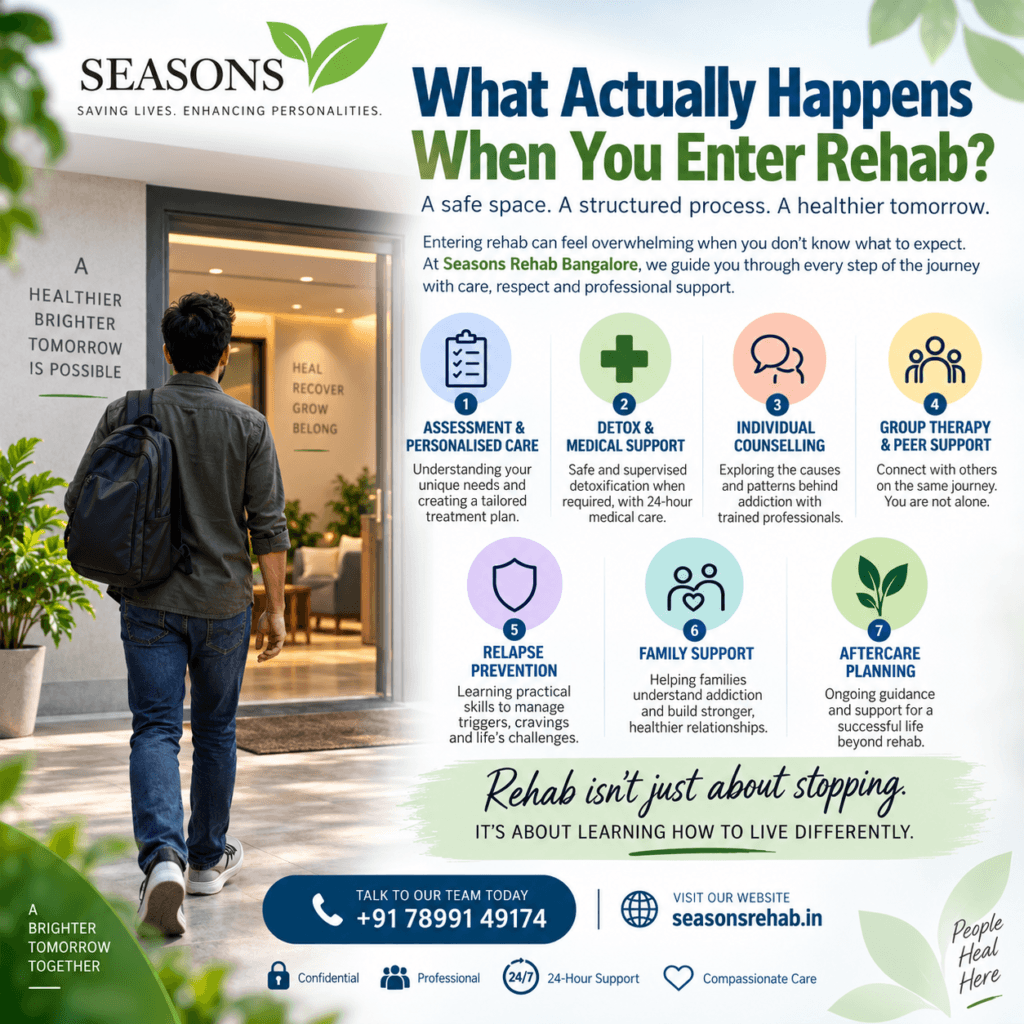
1. The First Step: Admission and Assessment
Entering rehab usually begins with an assessment.
The treatment team gathers information about the person’s substance use, medical history, psychological well-being, previous treatment experiences and current circumstances. The team may also discuss family relationships, lifestyle, work or education and other factors that could affect recovery.
This assessment helps the treatment team understand the individual’s needs and develop an appropriate treatment plan.
The goal isn’t to judge someone for their past. It is to understand where they are now and what kind of support they may need.
2. A Safe and Structured Environment
One of the biggest changes after entering rehab is the environment.
Addiction can become closely connected to certain people, places, routines and situations. Temporarily stepping away from those triggers can give a person an opportunity to focus on recovery.
At Seasons Rehab Bangalore, a structured routine can help individuals develop consistency around activities such as counselling, therapy, healthy meals, rest, recreation and recovery-focused activities.
A predictable routine can be particularly helpful during the early stages of recovery.
3. Medical Evaluation and Detoxification
For some people, treatment begins with detoxification.
Detox is the process through which the body clears alcohol or drugs after regular use. Depending on the substance, amount used, duration of use and the person’s health, withdrawal symptoms can range from mild to potentially serious.
For this reason, people who have been regularly using alcohol or certain drugs should not assume that suddenly stopping on their own is always safe.
Where medically appropriate, detox may involve monitoring, supportive care and medications prescribed by qualified medical professionals to manage withdrawal symptoms.
Importantly, detox is not the same as rehabilitation.
Detox primarily addresses the physical effects of stopping substance use. Rehabilitation goes further by addressing the psychological, behavioural and social factors associated with addiction.
4. Understanding Why Addiction Happened
Once immediate physical concerns are addressed, treatment can focus more deeply on the causes and patterns surrounding addiction.
Counselling and psychotherapy can help individuals explore questions such as:
What situations trigger substance use?
How do stress and emotions influence drinking or drug use?
Are there unhealthy thought patterns contributing to substance use?
How have relationships been affected?
What situations increase the risk of relapse?
What healthier coping strategies can replace substance use?
The objective is not simply to stop using a substance temporarily. Recovery involves learning how to manage life without depending on alcohol or drugs.



5. Individual Counselling
Individual counselling provides a private setting where a person can discuss experiences, emotions and challenges with a trained professional.
Depending on the person’s needs, therapy may address issues such as anxiety, depression, trauma, relationship difficulties, anger, low self-esteem, stress or unhealthy coping mechanisms.
Therapy can also help individuals identify situations that may increase their risk of returning to substance use.
6. Group Therapy and Peer Support
Group sessions are another important part of many rehabilitation programmes.
Being around people who are experiencing similar challenges can reduce feelings of isolation. Group discussions can provide opportunities to share experiences, listen to others and learn different approaches to handling difficult situations.
For many people, discovering that they are not alone can be an important part of the recovery process.
7. Learning Relapse-Prevention Skills
Recovery doesn’t end when cravings disappear.
A major part of rehabilitation is preparing for situations that may challenge sobriety after treatment.
Individuals may learn strategies for:
Recognising personal triggers
Managing cravings
Handling stress
Dealing with peer pressure
Establishing healthier routines
Avoiding high-risk situations
Responding to emotional setbacks
Building a supportive network
Developing a plan for difficult situations
The aim is to help individuals become better prepared for life outside the rehabilitation environment.
8. Family Involvement
Addiction affects more than the person using alcohol or drugs. Families may experience stress, conflict, financial difficulties, broken trust and emotional exhaustion.
Where appropriate, family counselling or education can help family members understand addiction and learn healthier ways of supporting recovery.
Families can also learn about boundaries, communication and how to support a loved one without unintentionally enabling addictive behaviour.
9. Developing a Healthier Daily Routine
Addiction can disrupt sleep, nutrition, exercise, relationships, work and other aspects of everyday life.
Rehabilitation provides an opportunity to rebuild healthier routines.
Depending on the individual’s treatment programme, daily activities may include therapy, counselling, physical activity, recreation, relaxation, healthy meals and adequate rest.
These seemingly simple routines can become important building blocks for a more stable lifestyle.
10. Preparing for Life After Rehab
One of the most important parts of treatment is planning what happens after leaving rehab.
Returning to the same environment without a plan can create challenges for someone in early recovery.
An aftercare plan may involve continued counselling, support groups, family support, follow-up appointments and strategies for managing triggers and cravings.
The exact plan should be tailored to the individual’s circumstances and treatment needs.
How Long Does Rehab Take?
There is no single treatment duration that works for everyone.
The appropriate length of treatment can depend on factors such as the substance involved, severity and duration of use, medical and psychological needs, previous treatment history, progress during treatment and the individual’s support system.
Rather than focusing only on a fixed number of days, it can be more useful to consider whether the person has received sufficient support to develop the skills and stability needed for continued recovery.
What Should You Expect When You Enter Seasons Rehab Bangalore?
Entering rehab doesn’t mean that you have failed. For many people, it represents a decision to step away from addiction and begin addressing the underlying issues that have made recovery difficult.
At Seasons Rehab Bangalore, the rehabilitation process can include assessment, medical support when required, counselling, therapy, structured routines, relapse-prevention education and ongoing recovery planning.
Every person’s recovery journey is different. Treatment should therefore be based on the individual’s needs rather than a one-size-fits-all approach.
Taking the First Step
If you or someone in your family is struggling with alcohol or drug dependence, you don’t have to wait until the situation becomes a crisis before seeking professional guidance.
Learning what happens in rehab can make the decision to ask for help easier.
Seasons Rehab Bangalore provides a supportive environment for individuals seeking professional help for addiction and recovery.
If you are considering treatment, speak with a qualified addiction-treatment professional to understand what type of care may be appropriate for your situation.
Seasons Rehab Bangalore — Helping individuals take the next step toward recovery.
Take the First Step Towards Recovery
Rise and Shine – Seasons Rehab – India, Bangalore